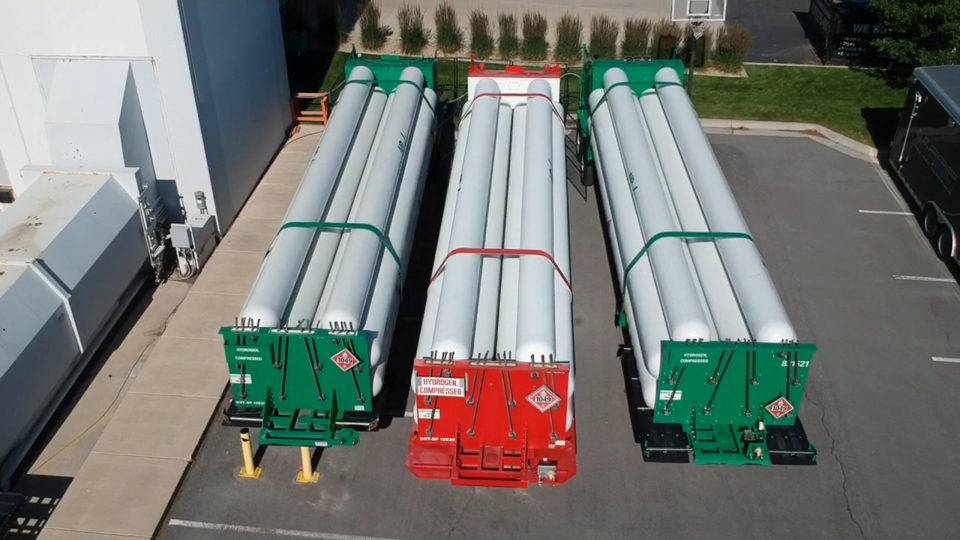
Microsoft has successfully tested a 250-kilowatt fuel system that powered a row of data centre servers for 48 consecutive hours this June.
Microsoft is testing hydrogen fuel cells to power its data centre servers, making it the first company to build a clean energy power source using the most abundant element on the planet.
The company is working on replacement technologies for diesel to maintain or improve service availability. It is seeing promise in hydrogen fuel cells and batteries, said Brian Janous, general manager of Microsoft’s team for data centre, energy and sustainability strategy.
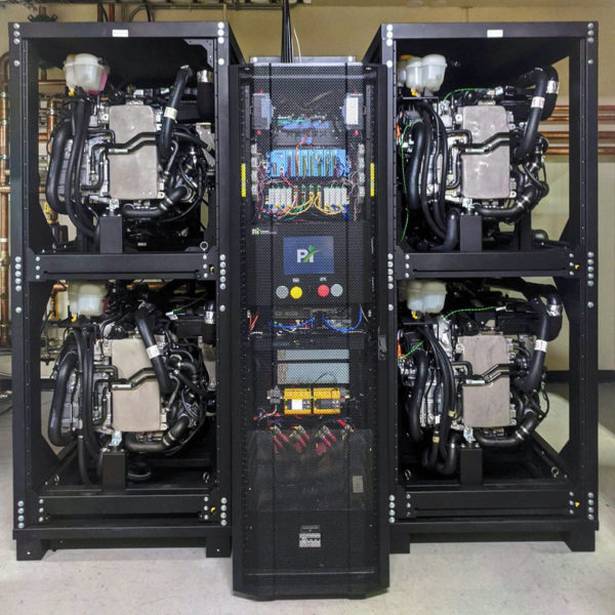
Microsoft has successfully tested a 250-kilowatt fuel system that powered a row of data centre servers for 48 consecutive hours this June. Power Innovations had built the system to help Microsoft explore the potential of using hydrogen fuel cells.
“It is the largest computer backup power system that we know that is running on hydrogen and it has run the longest continuous test,” Mark Monroe, principle infrastructure engineer at Microsoft said.
The successful test is Microsoft’s latest milestone in its commitment to be carbon negative by 2030, as the technology company aims to eliminate its dependency on diesel fuel.
The next step for the team is to procure and test a 3-megawatt fuel cell system, which is on par with the size of diesel-powered backup generators at Azure data centres.
Microsoft, like most cloud providers, currently uses diesel-powered generators at its Azure data centres to support continuous operations in the event of power outages and other service disruptions.
They are expensive and they sit around and don’t do anything for more than 99% of their life, said Microsoft.
In recent years, hydrogen fuel cell costs have plummeted to the point that they are now an economically viable alternative to diesel-powered backup generators.
Microsoft started thinking about using fuel cells for backup power at data centers in 2018, when researchers from the National Renewable Energy Laboratory in Colorado, powered a rack of computers with a proton exchange membrane, or PEM, hydrogen fuel cell.

Flipkart launches its first startup accelerator programme
BENGALURU: Flipkart on Monday announced the launch of ‘Flipkart Leap’ — thecompanys first startup accelerator programme.With the call-for-entries beginning today, ‘Flipkart Leap’ will identify B2C and B2Bstartups and help them scale through an intensive 16-week virtual programme, thecompany said in a statement.Throughout the programme, Flipkart’s leadership from business, operations, product andtechnology will mentor the selected…

Airific Systems launches UV-based air disinfectant for air conditioning systems
NEW DELHI: Tech startup Airific Systems has launched UVHeal SafeAir, a UV-basedHVAC Air Disinfectant’ for central air conditioning systems. The company claims thatUVHeal SafeAir helps in controlling the spread of airborne viruses such as COVID-19.UVHeal SafeAir uses the proven UVGI (ultraviolet germicidal irradiation) technology todisinfect the circulated air by destroying the DNA or RNA of…

Huawei says it’s running out of chips for its smartphones because of US sanctions
Huawei, the world’s biggest smartphone vendor, says it’s running out of processor chips because of US sanctions against the company, The Associated Press reported. And according to Richard Yu, CEO of Huawei’s consumer business unit, as of next month the Chinese phone manufacturer will no longer be able to make its own Kirin chipsets due to the…
 Tech
Tech 
Leave a comment